Artisan vs Commercial Baking | What Food Businesses Need to Know

The distinction between artisan baking and commercial baking is often presented as a matter of style, scale, or personal preference. In practice, it is a business decision — one that affects margins, consistency, staffing, ingredient costs, and long-term brand reputation.
For café and bakery owners, this is not an abstract debate.
It shapes how products are made, how they perform under service pressure, and how customers perceive quality.
This article examines the real operational differences between artisan and commercial baking — beyond aesthetics — and why understanding that distinction matters for any food business serious about standards.
This distinction becomes especially important when viewed through a commercial lens. As explored in Why Quality Over Quantity Is the Only Viable Model for Modern Pâtisserie, restraint and ingredient integrity are not aesthetic preferences — they are structural decisions that directly affect margins, consistency, and long-term reputation.

Handmade vs. machine-made baking—artisan bakers craft unique, high-quality goods,
while commercial bakeries prioritise mass production.
What Artisan Baking Actually Means in a Professional Context
Artisan baking is frequently described as “handmade” or “traditional”, but those descriptions miss the point.
In professional environments, artisan baking is defined by:
-
judgement-led production
-
controlled processes
-
intentional ingredient selection
-
limited but repeatable output
Artisan baking prioritises:
-
flavour development over speed
-
structure over decoration
-
systems that support consistency without industrial shortcuts
This does not mean inefficiency or romanticism. Well-run artisan operations rely on discipline, not improvisation.
Key characteristics include:
-
natural fermentation or controlled resting times
-
raw ingredients chosen for performance, not just cost
-
smaller production runs that reduce waste
-
menus designed around mastery rather than breadth
Artisan baking, when done properly, is not casual.
It is precise.

Artisan bakers use natural, high-quality ingredients, while commercial
baking often relies on additives and preservatives for mass production.
What Commercial Baking Optimises For
Commercial baking is designed to solve a different problem.
Its priorities are:
-
volume
-
uniformity
-
speed
-
extended shelf life
To achieve this, commercial systems rely on:
-
industrial machinery
-
stabilisers, emulsifiers, and preservatives
-
ingredient standardisation
-
processes engineered to reduce variability
This model performs well in environments where:
-
scale outweighs individuality
-
shelf life is critical
-
labour skill levels vary
-
cost per unit must be tightly controlled
However, these efficiencies come with trade-offs.
Commercial baking typically sacrifices:
-
flavour complexity
-
ingredient transparency
-
adaptability
-
brand distinction
For operators attempting to position themselves as quality-led or premium, these trade-offs matter.
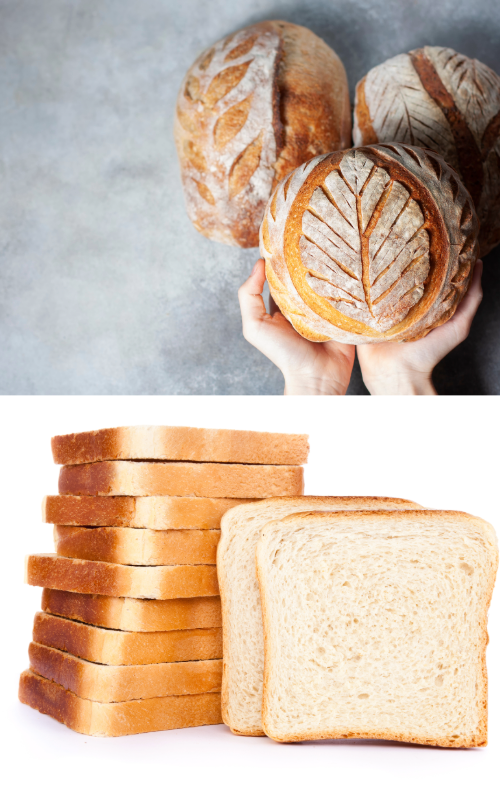
Artisan baking is making a comeback! Consumers are choosing small-batch,
handcrafted goods over mass-produced supermarket bread.
The Operational Differences That Actually Matter
The artisan vs commercial distinction becomes meaningful when viewed through an operational lens.
1. Ingredients
Artisan baking uses fewer ingredients, chosen intentionally.
Commercial baking relies on formulation to maintain consistency at scale
Fewer ingredients mean:
- clearer flavour profiles
- simpler procurement
- fewer points of failure
More ingredients mean:
-
longer labels
-
higher dependency on suppliers
-
less flexibility under cost pressure

Artisan baking is making a comeback! Consumers are choosing small-batch,
handcrafted goods over mass-produced supermarket bread.
2. Process Control
Artisan systems require skilled judgement but reward it with adaptability.
Commercial systems reduce the need for judgement but are rigid once set.
For smaller food businesses, rigidity can become a liability when:
-
ingredient prices fluctuate
-
staffing changes
-
customer expectations evolve

Baking from scratch using sustainably sourced ingredients—
why I choose quality over quantity in my baking journey.
3. Portioning and Waste
Artisan models often rely on portion discipline rather than excess.
Smaller, well-balanced portions:
-
reduce ingredient usage
-
improve consistency
-
increase perceived quality
-
limit waste
Commercial models frequently compensate for flavour dilution with size — a strategy that erodes margin over time.
4. Brand Positioning
Artisan baking supports:
-
narrative
-
trust
-
repeat custom
-
premium positioning
Commercial baking supports:
-
availability
-
speed
-
price competitiveness
Neither is inherently wrong — but mixing the two models without clarity is where many businesses fail.

Why This Distinction Matters for Modern Cafés and Bakeries
Many cafés and bakeries sit uncomfortably between artisan and commercial models.
They:
-
use commercial ingredients
-
attempt artisan pricing
-
offer wide menus
-
rely on visual appeal rather than flavour integrity
The result is often:
-
inconsistent quality
-
compressed margins
-
customer confusion
-
operational stress
Choosing an artisan-led model does not mean rejecting efficiency.
It means designing systems that protect quality while remaining commercially viable.
As explored in Why Quality Over Quantity Is the Only Viable Model for Modern Pâtisserie, restraint and ingredient integrity are not aesthetic preferences — they are structural decisions that directly affect profitability and reputation.
Which Model Is “Better”?
This is the wrong question.
The real question is:
Which model aligns with your standards, your customer expectations, and your operational reality?
For businesses aiming to compete on quality, trust, and repeat custom, artisan-led systems offer:
-
clearer positioning
-
stronger flavour identity
-
greater long-term resilience
Commercial systems excel at scale — but scale without distinction is increasingly fragile.
A Final Note on Standards
Artisan baking is not about nostalgia or exclusivity.
It is about control.
Control over:
-
ingredients
-
portions
-
flavour
-
consistency
-
decision-making
In a crowded market, standards are not a marketing message.
They are a business strategy.
Read The Baking Standard
Editorial guidance for bakers and food founders who care about technique, ingredients, and long-term credibility.
Unsubscribe anytime.
About The Author